When a cargo vessel leaked thousands of gallons of fuel into the ocean, the black tide spread across miles of coastline within hours. Hundreds of seabirds were trapped in the toxic slick, but one small penguin became the face of a rescue mission that would unite volunteers from around the world.
The Day the Ocean Turned Black
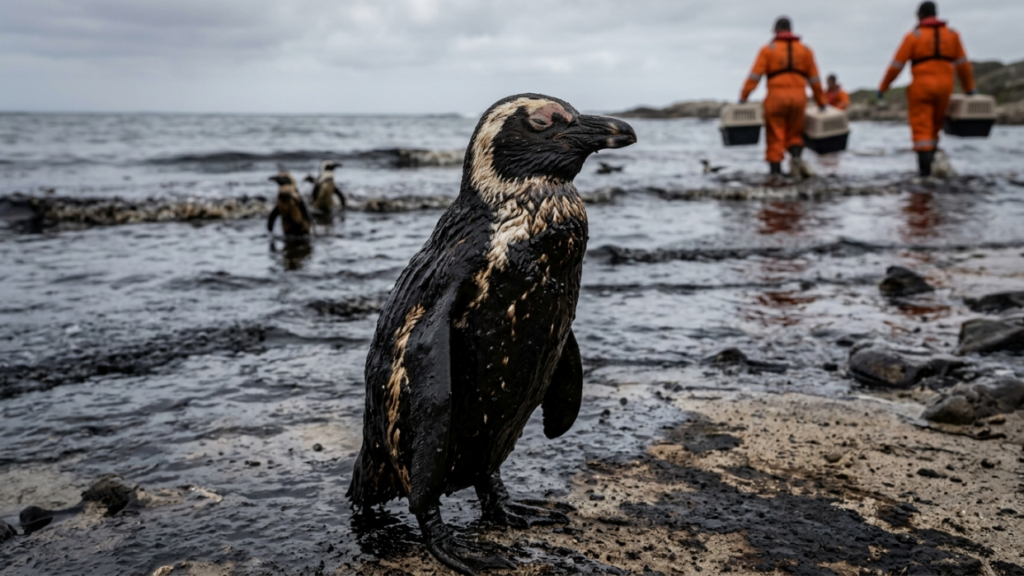
It began with a single distress call from fishermen working just offshore.
The water no longer reflected the blue morning sky.
Instead, a thick layer of dark oil drifted across the waves, slowly creeping toward one of the region’s most important penguin breeding beaches.
Wildlife rescue teams rushed to the coastline.
What they found was devastating.
Penguins struggled to swim through the sticky oil, their feathers clumped together under the heavy coating.
Unable to waterproof themselves, many began losing body heat in the cold ocean.
Others became exhausted after trying to clean their feathers, swallowing toxic oil with every desperate attempt.
Among them was a young African penguin later named Echo.
She had become completely covered from head to tail.
Each step across the beach was slow and painful.
Her eyes were partially sealed by oil, making it difficult to see.
Every wave pushed her farther from safety.
When rescuers finally reached her, Echo no longer tried to escape.
She simply stood motionless, trembling from cold and exhaustion.
Nearby, dozens of other penguins were in the same desperate condition.
The rescue mission had only just begun.
Thousands of Hands Working Together
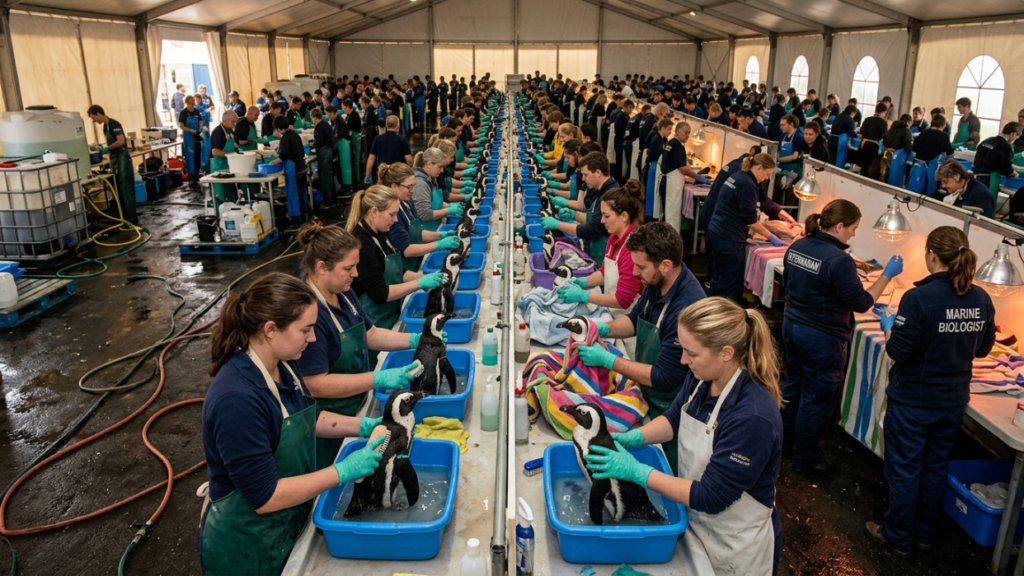
Echo was transported to a specialized marine wildlife rehabilitation center alongside hundreds of other rescued seabirds.
Every penguin received immediate medical care.
They were warmed with heated blankets before receiving fluids to treat dehydration.
Only after they were strong enough could the difficult cleaning process begin.
Removing oil from penguin feathers is an incredibly delicate task.
Volunteers spent hours carefully washing each bird using warm water and specially formulated cleaning solutions.
Every feather had to be restored to its natural condition.
Without perfectly clean feathers, penguins cannot stay warm or swim properly.
Echo remained remarkably calm throughout the treatment.
Although frightened, she slowly regained her strength with every passing day.
Meanwhile, thousands of volunteers worked along the coastline to prevent even more wildlife from becoming trapped.
Veterinarians.
Marine biologists.
Students.
Retired fishermen.
Entire families.
People from different countries came together with one shared purpose—to protect the ocean’s wildlife.
Over the following weeks, more than a thousand penguins were rescued from the spill.
It became one of the largest seabird rehabilitation efforts ever carried out in the region.
Back Where She Belonged
Several months later, Echo looked almost impossible to recognize.
Her feathers had regained their smooth waterproof shine.
She had returned to a healthy weight.
Most importantly, she had recovered the strength needed to survive in the wild once again.
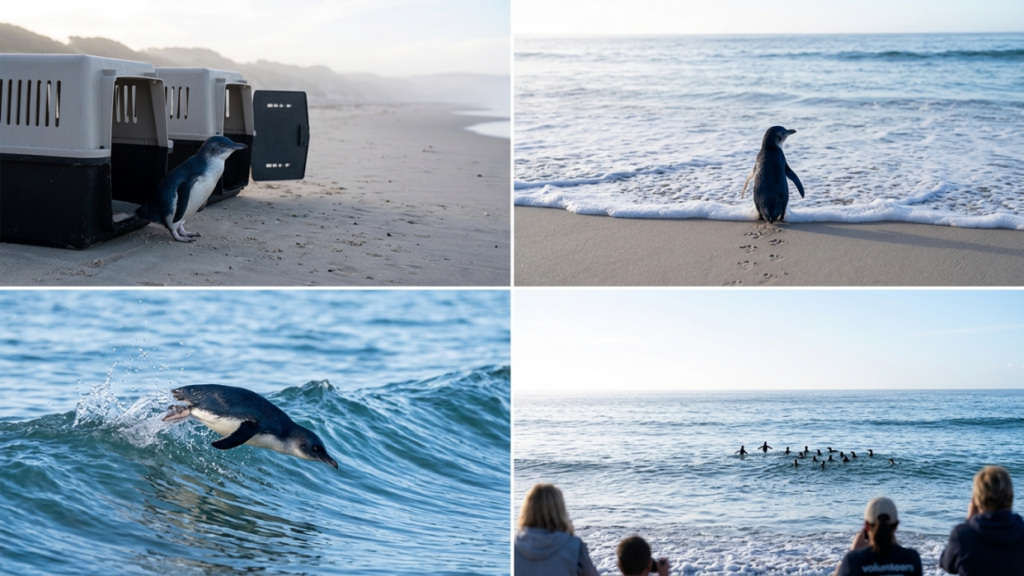
On the morning of her release, dozens of rehabilitated penguins stood quietly inside transport crates facing the ocean.
As each door opened, the birds hesitated only briefly before waddling across the sand.
Echo paused at the shoreline for just a moment.
Then she dove into the waves.
Within seconds, she disappeared into the open sea alongside the other rescued penguins.
The volunteers watched until the last black-and-white figures became tiny silhouettes against the horizon.
For many, it was the perfect ending.
But Echo’s rescue became much more than the story of one penguin.
Her journey inspired stronger support for marine conservation, faster emergency responses to future oil spills, and increased public awareness about the fragile balance between human activity and ocean wildlife.
Today, schoolchildren still learn about the rescue operation that saved an entire colony.
They learn that one accident can threaten thousands of lives.
But they also learn something just as important.
When compassion moves as quickly as disaster, hope has a chance to survive.
Echo will never know how many people worked together to save her life.
She doesn’t need to.
Every graceful dive through the ocean is already the greatest thank-you anyone could ask for.
Because every rescued animal that returns to the wild carries with it a reminder that even after humanity causes harm, humanity also has the power to make things right.
