Every year, millions of wild animals lose their lives attempting to cross busy highways. But in one small mountain region, a simple bridge transformed a deadly stretch of road into a symbol of hope for wildlife conservation.
A Highway That Divided More Than Land
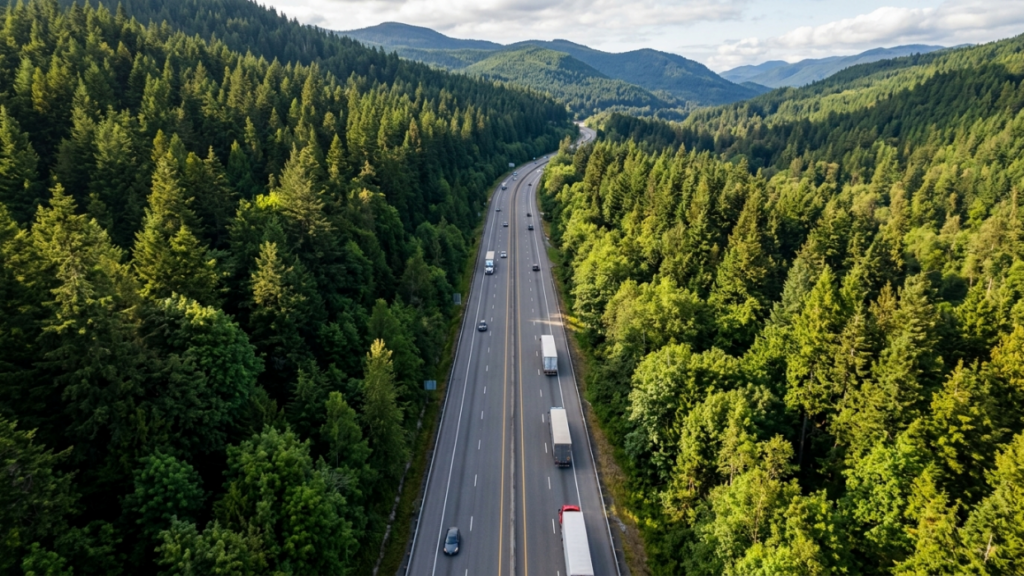
When the North Ridge Highway opened nearly twenty years ago, it dramatically reduced travel time between several mountain towns. Local businesses flourished, tourism increased, and transportation became easier than ever before.
However, there was an unintended consequence that few people noticed at first.
The highway cut directly through one of the region’s oldest wildlife migration routes.
For generations, deer, foxes, bears, wild boars, and countless smaller animals had traveled through the forest in search of food, water, and seasonal breeding grounds. The new road suddenly became a dangerous barrier separating habitats that had once been connected.
At first, only a few wildlife collisions were reported.
Then the numbers continued to rise.
Drivers frequently encountered injured animals along the roadside, especially during spring and autumn migration seasons.
Wildlife biologists became increasingly concerned.
Camera surveys showed that many animals approached the highway but turned back after hearing the constant flow of traffic. Others attempted to cross, often with tragic consequences.
The road had not only endangered wildlife—it had fragmented entire ecosystems.
Something had to change.
An Unusual Solution That Few Believed Would Work
After years of research, environmental engineers proposed an ambitious idea.
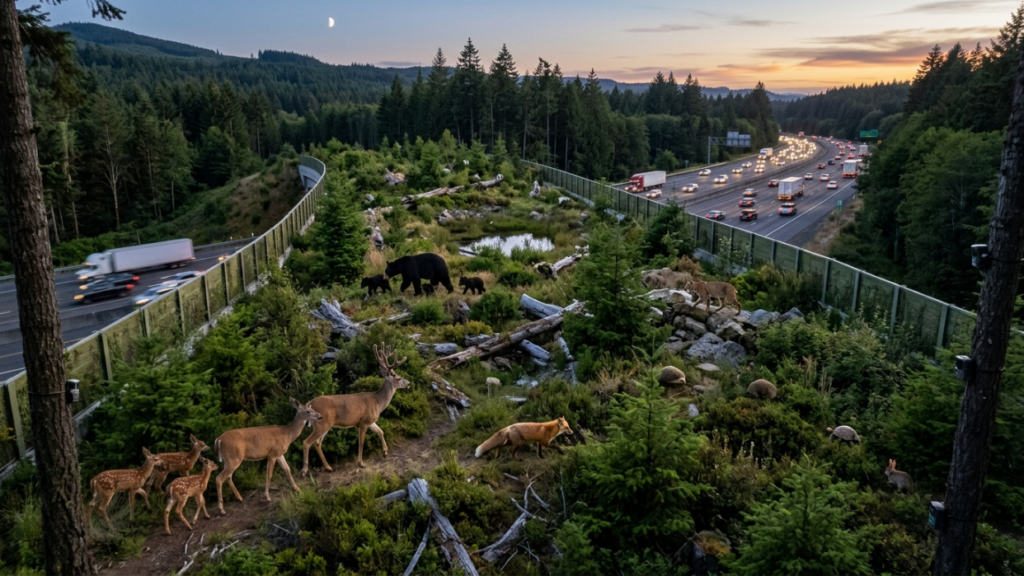
Instead of building another underpass or installing more warning signs, they suggested constructing a wide, forest-covered bridge stretching directly over the highway.
Unlike an ordinary bridge, this structure would be designed entirely for wildlife.
Native trees and shrubs were planted across its surface.
Natural rocks, fallen logs, and small ponds recreated the surrounding habitat.
Tall sound barriers reduced traffic noise, making animals feel safer while crossing.
Many people questioned whether wild animals would actually use it.
Some critics argued the project was too expensive.
Others doubted wildlife would ever trust an artificial structure.
The answer came only weeks after construction was completed.
Motion-activated cameras captured the first visitors.
A family of deer quietly crossed just before sunrise.
Later that night, a fox cautiously followed the same path.
Within months, the bridge was being used by dozens of different species.
Black bears wandered across during autumn.
Wildcats crossed unnoticed beneath the stars.
Even tiny creatures like hedgehogs, turtles, and rabbits found safe passage.
The bridge had become exactly what scientists had hoped—a natural pathway reconnecting habitats that had been divided for decades.
A Bridge That Changed the Future
Five years after the wildlife crossing opened, researchers compared accident reports with previous records.
The results exceeded every expectation.
Wildlife-vehicle collisions in the surrounding area had dropped by more than eighty percent.
Animal populations that had been declining began showing signs of recovery.
Species once rarely seen in the region slowly returned as migration routes reopened.
Drivers also benefited.
Fewer collisions meant safer roads, reduced vehicle damage, and greater awareness of local conservation efforts.
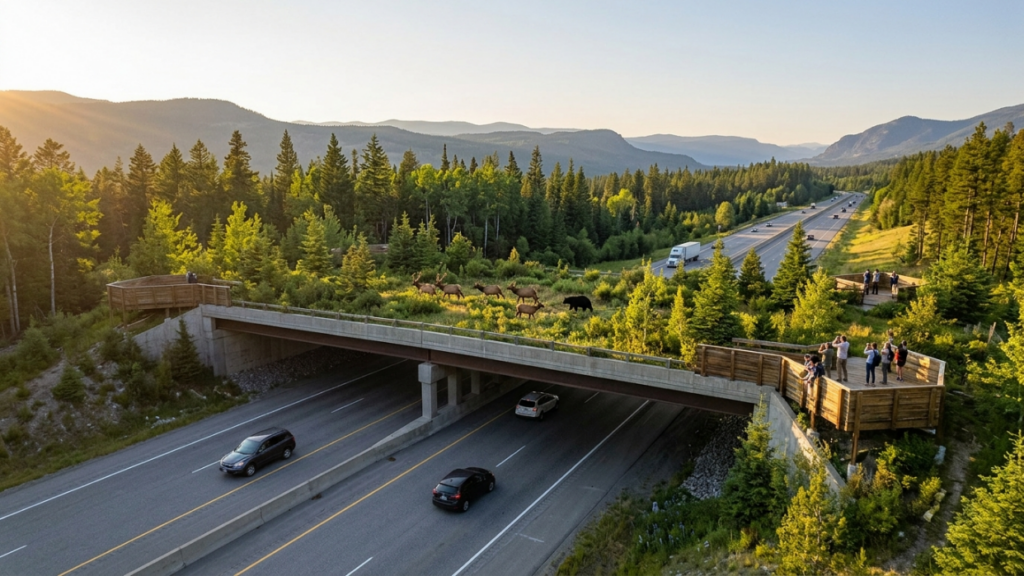
Today, the wildlife bridge has become a destination for students, photographers, and environmental researchers from around the world.
Observation platforms allow visitors to learn about the importance of habitat connectivity without disturbing the animals below.
Schools regularly organize educational trips, teaching children that protecting wildlife doesn’t always require dramatic rescues.
Sometimes it begins with thoughtful planning.
Sometimes it begins with understanding how human development affects nature.
And sometimes, the most powerful act of conservation is simply giving animals a safe path to continue the journey they’ve followed for thousands of years.
The bridge stands as a reminder that humans and wildlife do not have to compete for space.
With compassion, science, and cooperation, we can create a world where both are able to thrive together.
Every animal that quietly crosses the bridge each night is proof that small ideas can lead to extraordinary change.
